How NASA plans on keeping astronauts safe during Artemis II moon mission
Written by admin on April 1, 2026
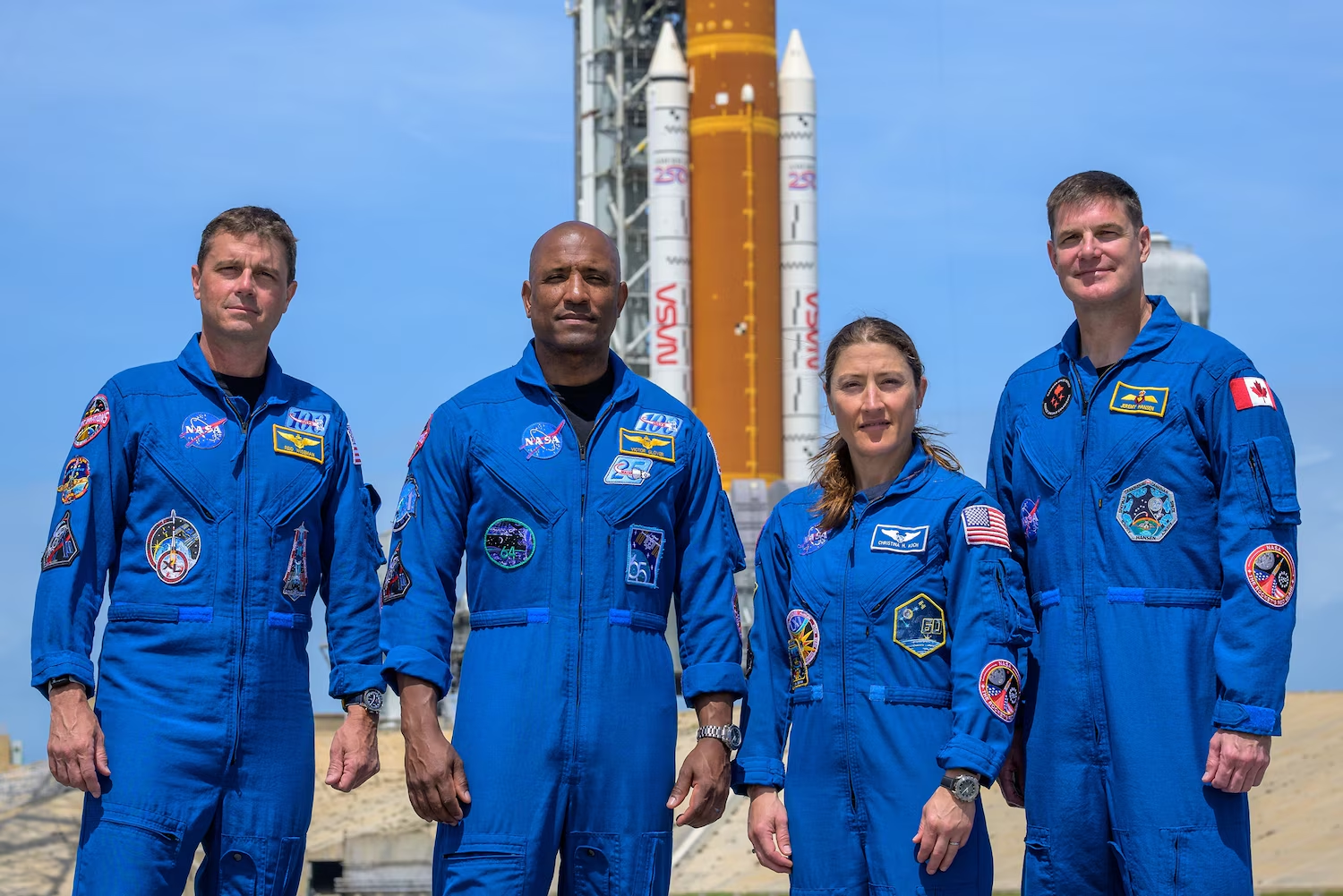
The Artemis II mission will be the first to the moon since 1972, sending astronauts farther into deep space than humans have ever traveled.
Despite all the preparations, safety systems and redundancies, the nature of human spaceflight is inherently risky, some experts told ABC News.
“I think it’d make everybody feel comfortable to say that all the risk was knocked down to zero,” Danny Olivas, former NASA astronaut and engineer, told ABC News. “The truth is it is not and never will be.”
For Artemis II, NASA leaders have emphasized that the mission is a flight test because it is the first time a crew will fly on the selected rocket configuration.
“We do everything we can to bring risk as close to zero as we possibly can,” NASA Administrator Jared Isaacman told ABC News. “But at some point, when you’re exploring the worlds beyond ours, there are some risks worth taking.”
NASA is using the 10-day mission to test a variety of systems, including communications and the life support systems for the crew. Olivas said that, for astronauts, the risks that come with space exploration — especially a test flight — are understood and accepted.
He added that Artemis II, like any human spaceflight mission, is filled with mitigated risks supported by years of testing and lots of learning along the way
“From an astronaut perspective, that’s all taken into account,” Olivas explained.
NASA is using a variety of tools and systems to ensure crew safety from launch to splashdown:
The crew of four will be wearing customized spacesuits called Orion Crew Survival System (OCCS) suits from launch through re-entry into Earth’s atmosphere.
The bright orange suits — paired with large, helmeted visors — create the very well-known astronaut silhouette.
NASA switched from white suits to bright orange suits in 1988 to make astronauts easier to spot during splashdown recovery from the ocean. The Artemis II suits are fire-resistant, have cooling capabilities and protect against depressurization, according to NASA.
The suits can also provide breathable air while removing carbon dioxide, keeping astronauts alive for up to about six days in emergency situations.